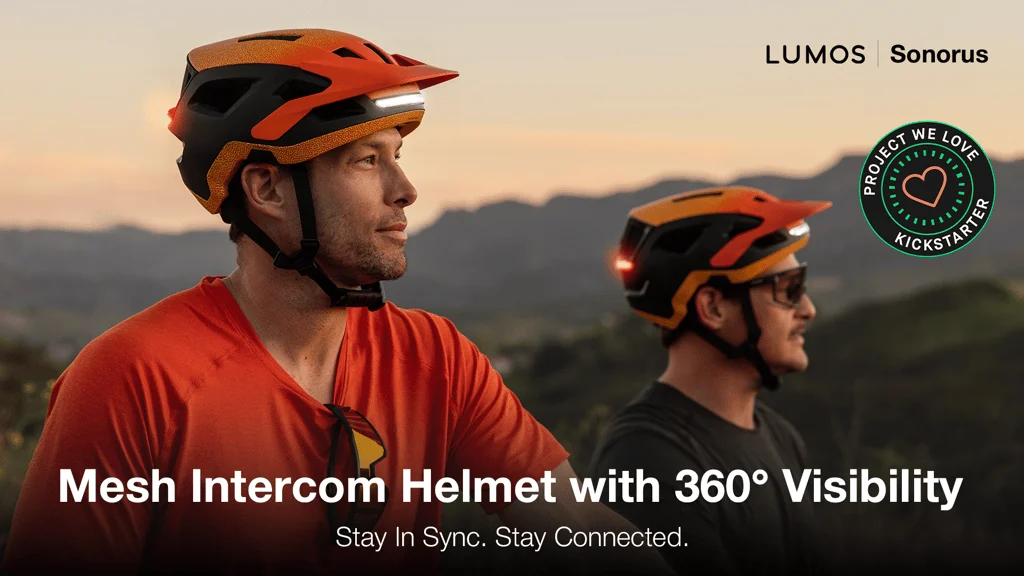
Lumos Sonorus is a smart cycling helmet built around a surprisingly practical idea: the easiest place to put group communication is inside the safety gear every rider already needs. It combines a full-duplex mesh intercom for up to 15 riders with open-ear Bluetooth audio, integrated lights, turn signals, an automatic brake light, Mips, and an e-bike-oriented helmet shell.
I think Sonorus makes the strongest case for itself when viewed as a coordinated riding system, not simply a helmet with extra electronics. For couples, club riders, touring partners, and e-bike groups, it could replace a messy mix of shouted warnings, phone calls, earbuds, and separate helmet lights. The important qualification is range: the advertised maximum applies to open conditions, while buildings and terrain can shorten the useful connection considerably.
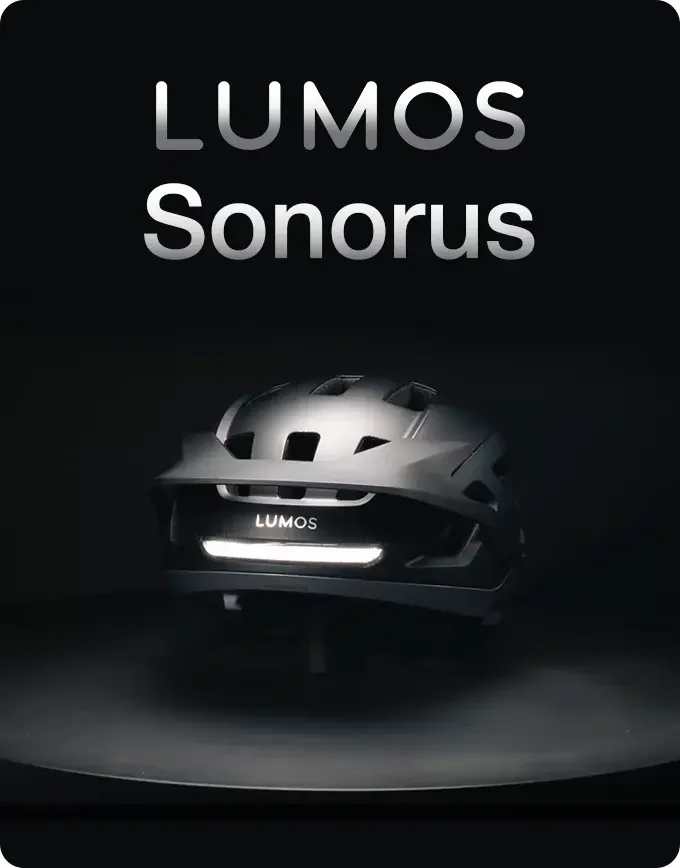
Sonorus combines a protective helmet shell with lighting, audio, controls, and a mesh intercom.
The Helmet Becomes the Group’s Communication Layer
Sonorus supports full-duplex conversation, meaning connected riders can speak and listen naturally instead of taking turns with a push-to-talk radio. Lumos says a group can include as many as 15 helmets. Pairing and group setup run through the Lumos app, while physical controls on the helmet handle everyday actions once the ride begins.
That matters because group-ride communication is usually most valuable at the awkward moments. A rider at the back gets a flat. A touring partner misses a turn. A ride leader sees debris and needs everyone to slow down. Stopping to make a call is too late, while shouting becomes unreliable as soon as wind, traffic, or distance separates the group.
The mesh design is meant to help a spread-out pack maintain its link as riders relay the connection. Lumos claims up to 1 mile (1.6 km) between two helmets in open, unobstructed conditions and says a larger group can extend total coverage. Those numbers describe best-case geometry, not a promise for every street or trail.
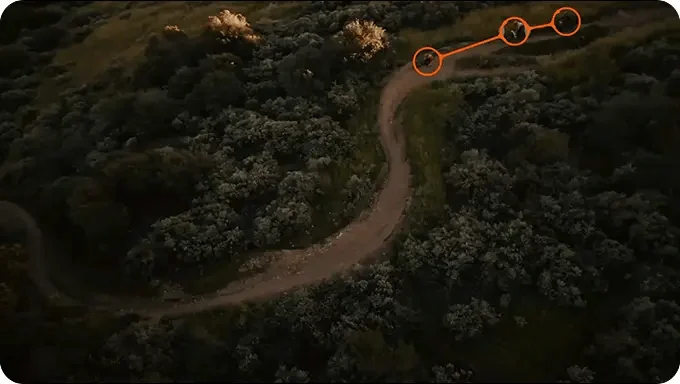
Mesh networking is intended to keep a spread-out group connected, though terrain and obstacles still matter.
Treat One Mile as a Best-Case Number
The campaign itself notes that heavy interference in a dense city can reduce point-to-point range to around 0.3 miles (0.48 km). That caveat aligns with pre-production testing by Freshly Charged. Its riders reported clear communication at useful distances in open sight lines, including when one rider descended a hill, but the signal suffered when buildings blocked the path.
This does not make the intercom pointless. It simply changes the buying question. I would judge Sonorus by whether it keeps two or more riders in conversational reach during normal group spacing, not by whether it reproduces a laboratory maximum in a city. Riders who expect reliable mile-long communication through several blocks of buildings are likely to be disappointed. A club group stretched along an open road or trail is a more convincing scenario.
Open-Ear Audio Makes Sense When Speech Comes First
Each helmet includes open-ear speakers and a microphone, so nothing has to sit inside the ear canal. Bluetooth adds music, navigation prompts, and phone calls. When another rider speaks over the intercom, Sonorus lowers the music rather than stopping it, then restores the level after the conversation.
That hierarchy is well chosen. On a bicycle, audio should not overpower the environment. The point is to hear a warning from a friend, a navigation cue, and the traffic around you without swapping devices or sealing your ears. The available field reports describe voices as clear enough for conversation at practical distances, while also noting that the speakers do not replace dedicated headphones for loud or detailed music.

The open-ear layout is designed to keep conversation and background audio outside the ear canal.
I see that limitation as part of the design rather than a failure. Sonorus is communication-first audio. A rider who wants bass-heavy isolation should look elsewhere, because isolation conflicts with the awareness this helmet is trying to preserve. For a pair talking through a windy ride while keeping both ears open, the compromise is much easier to justify.
Lighting Is Not a Side Feature Here
Lumos built its reputation around illuminated helmets, and Sonorus carries that idea beyond a rear safety light. LEDs wrap visibility around the helmet, with white light at the front and red light at the rear. A small wireless handlebar remote controls turn signals, while a motion sensor in the rear module triggers the brake light when the rider slows.
Helmet-height signalling is useful because it complements lights mounted lower on the bicycle. It can put a turn indication closer to a driver’s sight line and make the rider’s intention visible from more than one direction. Freshly Charged’s pre-production test praised the brightness of both the brake light and the forward-facing indicators. That observation supports the visibility design, although no light can guarantee that another road user will notice or respond correctly.
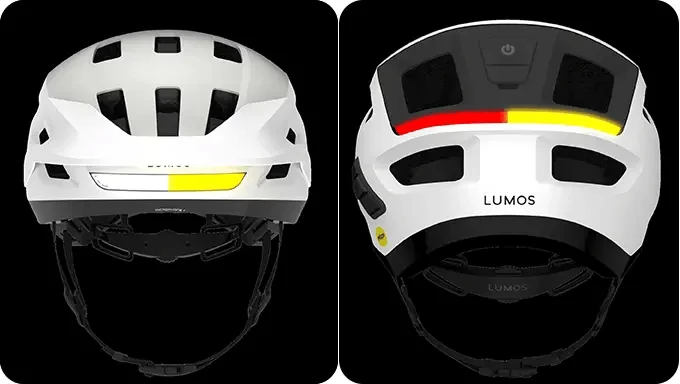
The turn signal appears at both the front and rear of the helmet.
The app can also synchronize compatible Lumos lights and multiple Sonorus helmets to the same flash pattern. On a night group ride, that creates a larger, visually coherent presence instead of a scatter of unrelated blink rates. I would still use a proper bike headlight for illuminating the road; Sonorus’s lighting is principally about being seen and signalling intent.
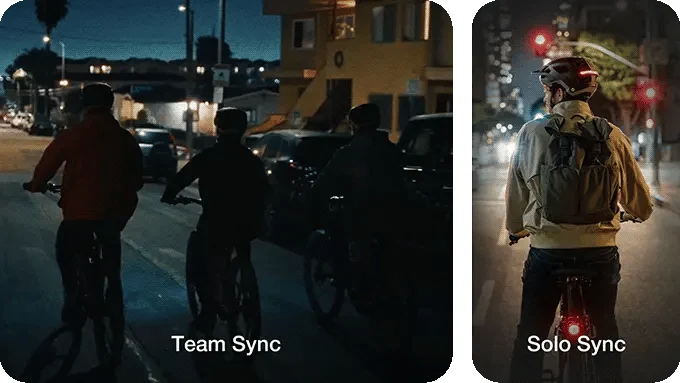
Connected Lumos lights can share a flash pattern across a group.
A Smart Helmet Still Has to Work as a Helmet
Connected features only matter if the underlying helmet is suitable for the ride. Lumos lists NTA 8776 certification, a standard developed for the higher speeds associated with speed pedelecs and faster e-bikes. The company also specifies Mips, deeper rear coverage, internal ventilation channels, adjustable fit hardware, and a Fidlock magnetic buckle.
Those details make Sonorus more credible for urban and e-bike use than a gadget-first helmet with token protection. Even so, certification and Mips should be understood precisely: they describe design and test standards, not immunity from injury. Correct size, secure adjustment, replacement after a significant impact, and local riding rules still matter.
Fit deserves particular attention. One video tester found the helmet comfortable and praised its adjustability, but felt the tested sizes ran larger than expected. That is one person’s experience with sample units, not a universal sizing verdict. Measure head circumference, compare it with Lumos’s current fit guide, and pay attention to the return or exchange terms shown on the live campaign.
The helmet is also heavier than a stripped-down road lid. Third-party coverage reports roughly 510 g (1.12 lb) for a size small. That is not unusual for a smart or e-bike helmet carrying lights, speakers, controls, and a battery, but weight-sensitive road cyclists should treat it as a real trade-off rather than an invisible specification.
Removable Electronics Are the Quietly Important Feature
The feature I would most like to see become standard is the removable electronic core. Lights, controls, and battery technology can age differently from the energy-absorbing shell. Sonorus lets the rear module detach, so the connected hardware is not permanently trapped inside one helmet.
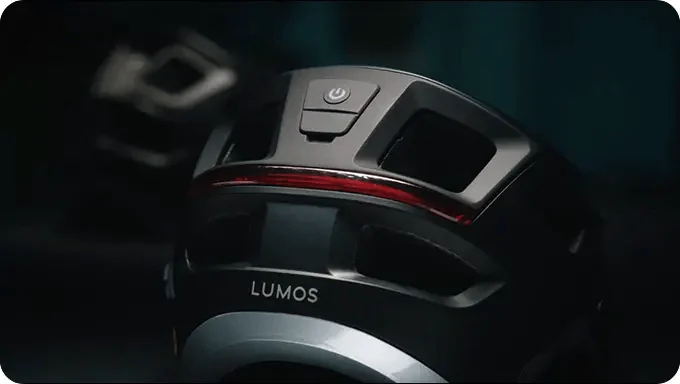
The electronic core is removable, separating connected hardware from the replaceable helmet shell.
Lumos presents this as a way to move the electronics into a replacement shell and avoid discarding functioning technology. That could make long-term ownership more sensible, especially if a battery needs service or the shell reaches the end of its recommended life. The benefit depends on Lumos continuing to sell compatible replacement parts, so prospective backers should check the live campaign for the latest support details rather than assume indefinite availability.
Who Will Get the Most From Lumos Sonorus?
Sonorus is not equally valuable to every cyclist. Its best audience is easy to define:
- couples and friends who regularly ride together;
- club riders and ride leaders who need to coordinate a moving pack;
- touring partners who can become separated at turns or climbs;
- mountain-bike groups riding with variable spacing;
- urban and Class 3 e-bike riders who want integrated signalling and an e-bike-oriented helmet standard;
- riders who avoid earbuds but still want conversation, navigation prompts, or quiet background audio.
The shared-system requirement is crucial. One Sonorus helmet can still provide lights, calls, and Bluetooth audio, but the mesh intercom becomes valuable only when at least one companion has compatible hardware. A mostly solo rider who already owns a good helmet and separate lights may find the extra complexity difficult to justify.
It is also worth being honest about expectations. This is not the lightest option, the speakers prioritize awareness over hi-fi sound, and the longest intercom range depends on open conditions. In return, the right rider gets fewer devices to mount, charge, pair, and operate independently.
Is Lumos Sonorus Worth Backing?
I would consider Sonorus for a household or group that rides together often enough to make the intercom part of every outing. Its combination of natural two-way conversation, open-ear audio, helmet-level turn signals, automatic braking indication, synchronized lighting, and removable electronics feels deliberately connected rather than randomly bundled.
The intercom’s obstacle-sensitive range is the main reason to keep expectations grounded. The strongest case is not a guaranteed mile across a city. It is clear communication across the ordinary gaps that form between riders, without blocking ambient sound or reaching for a phone.
If that matches how you ride, check the current Lumos Sonorus campaign details and consider whether the available configuration fits your group. If you mainly ride alone or want premium music reproduction, a simpler helmet and separate lighting may be the better use of your budget.
Lumos Sonorus FAQ
How many riders can use the Lumos Sonorus intercom?
Lumos says one mesh group can support up to 15 riders. Every participant who wants to join the intercom needs compatible connected hardware.
What is the realistic intercom range?
The claimed point-to-point maximum is up to 1 mile (1.6 km) in open, unobstructed conditions. Lumos says dense-city interference can reduce that to about 0.3 miles (0.48 km), and pre-production testing also found that buildings could interrupt the link. Treat the maximum as a best-case figure.
Can Sonorus play music and handle calls?
Yes. It supports Bluetooth music, navigation prompts, and phone calls through open-ear speakers. Music volume drops automatically when someone speaks over the intercom.
Does open-ear audio block traffic noise?
No. The speakers sit outside the ear canal so riders can continue hearing their surroundings. That supports awareness, but it also means the system is not intended to deliver the isolation or bass response of in-ear headphones.
How do the turn signals work?
A wireless handlebar remote activates indicators on the helmet. Sonorus shows turn signals at the front and rear, and its brake light is designed to activate automatically when the helmet detects deceleration.
Is Lumos Sonorus designed for e-bikes?
Lumos lists NTA 8776 certification, Mips, and extended rear coverage. NTA 8776 is associated with higher-speed e-bike use, but riders should still verify that the helmet meets local regulations and is appropriate for their specific vehicle and riding conditions.
Can the electronics be replaced separately?
The rear electronics module is removable. Lumos says it can be transferred to a compatible replacement shell, separating the technology from the part of the helmet that must eventually be retired. Check current availability and compatibility before relying on a future replacement path.
Where can I see the current campaign options?
Visit the Lumos Sonorus campaign for current configurations, fit information, availability, shipping terms, and other details that may change over time.
Disclosure: This article contains an affiliate link. We may earn a commission at no extra cost to you.